
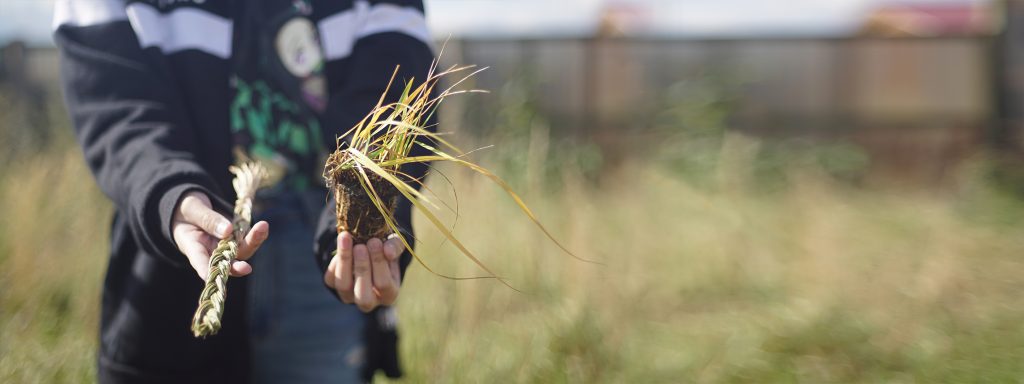
Think of Sweetgrass as an archetype for transformative approaches to addressing climate change. The Potential of Sweetgrass in Prairie Grasslands Carbon Sequestration and Biodiversity research project provided insight into the ecological role of Sweetgrass, a culturally significant plant to many Indigenous communities, by weaving together Indigenous ways of knowing with agricultural research methods and setting the stage for a systems-level research platform for understanding carbon flow through plants to the soil and future collaborations.
The Resilience Institute secured research funding from the AgriScience Canada program and facilitated new partnerships between Agriculture and AgriFood Canada (AAFC), the University of Lethbridge, Environment and Climate Change Canada (ECCC), and their current partners in the Piikani Nation. A peer reviewed article resulted from this work, as well as an article in the Narwhal, and it won the CanadaClean50 2025 Project of the Year.