In Remembrance and Gratitude for Piitaapoyi (Eagle Speaker) Peter Strikes With A Gun, Aapatohsi Piikani Nation 

A reflection by Laura S. Lynes, President & CEO, The Resilience Institute

For several years, many of our efforts to advance strategies to address climate change with the Piikani Nation were guided by Piitaapoyi (Elder Peter Strikes With A Gun). 

But this year, there was a cloud of grief hanging over that journey.  

We knew for some time that Piitaapoyi would be leaving the world soon; when I saw him on May 7th, I knew it would be the last. The last time I heard Peter sing, the last time I witnessed him generously share his wisdom, and the last time I’d be in the presence of his great spirit in physical form. One of Peter’s last wishes was to conduct a sweetgrass ceremony in Waterton National Park with a small group of project partners and youth. Despite being in a frail physical state, when Peter spoke, it was resonant.  

Peter was born July 29, 1942, and passed away May 31, 2026. Our partnership was strengthened in so many ways thanks to him and his wife, Jeanie Strikes With A Gun, who we are also deeply grateful for. 
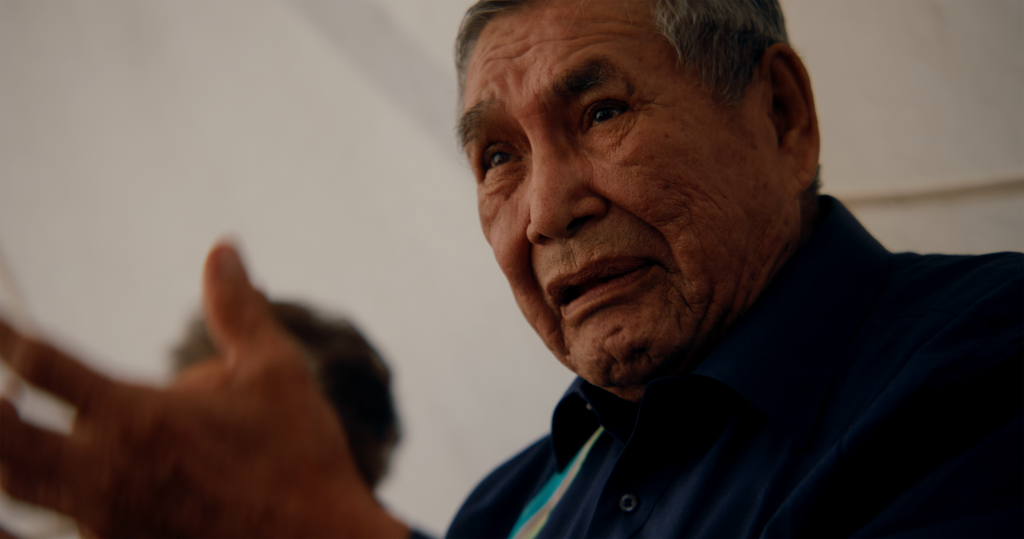
Elder Peter Strikes with a Gun. Photo by ReGeneration.

Who was Peter?  

For me, he was a kind man who embraced our efforts and generously shared his wisdom to advance goals under the sūṗiio’omaaksin (in the spirit of planting seeds) initiative, with a particular focus on inspiring Piikani youth to participate in the sweetgrass project.  

I learned more about Peter along the way. In addition to being the Chief of the Piikani First Nation from 1997 to 2006, he was a: 

  • Niitsitapiisini Piikanissini Elder  
  • Ceremonialist and traditional keeper and advisor to the Beaver Bundle (a sacred transfer given to the Blackfoot people) 
  • Niitsitapi teacher 
  • Knowledge keeper 
  • Historian 
  • Addictions and wellness counsellor 
  • Survivor of the Indian Residential Schools  
  • Recipient of the National Aboriginal Achievement Award the Queen Elizabeth II Golden Jubilee Medal, and the Alberta Centennial Medal  

A few weeks after Piitaapoyi’s passing, Piikani members planted sweetgrass in Waterton National Park – bringing the sacred plant home to where it has likely always been. This project, coined What Sweetgrass is Telling Us, has taught us humility, patience, and deep gratitude for bringing us together in this journey.  

Thank you to Calgary Foundation for enabling this work. 
Elder Peter Strikes with a Gun. Photo by ReGeneration.

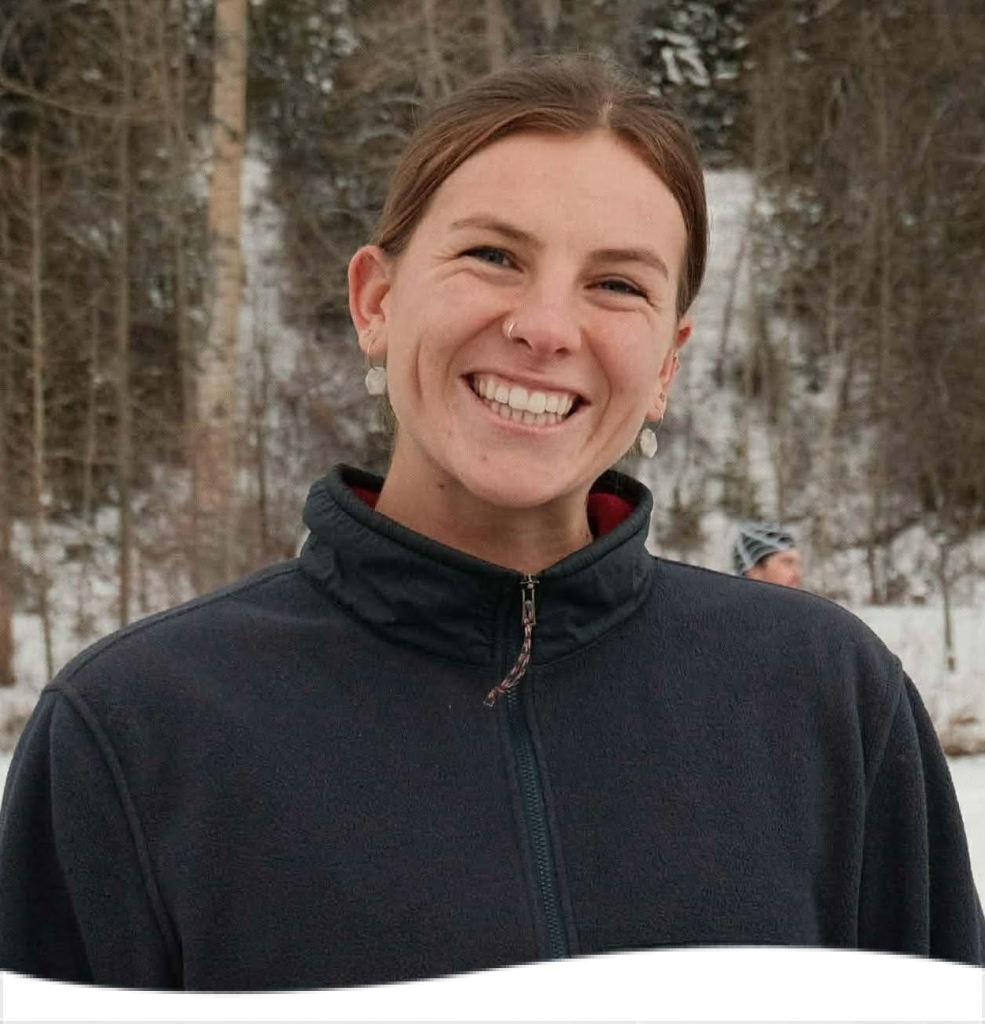
Nakita Rubuliak

Science Communicator and External Engagement Specialist

Nakita is a science communication professional with extensive experience in knowledge synthesis, fieldwork, art and design, and creative collaboration. Using a multidisciplinary lens, her work bridges research and storytelling, translating complex scientific topics into engaging messages and compelling graphics that resonate with a range of audiences.

Before joining TRI, Nakita worked as a Science Illustrator and Writer at Fuse Consulting and later with the Canadian Parks and Wilderness Society, experiences that nurtured her skills in science communication.

Above all, Nakita has a passion for connecting with people and communities, both in person and through visual storytelling. She approaches projects with a place-based lens and a deep respect for diverse perspectives and knowledge systems. 

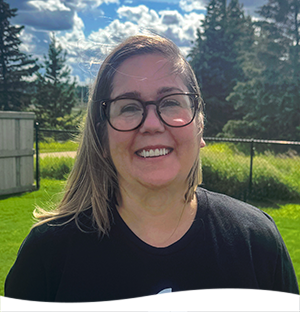
Jill Decker

Controller

Jill brings 20 years of experience in financial reporting, assurance, and compliance, with a strong specialization in the not-for-profit sector.  She holds a Bachelor of Commerce (Accounting) from the University of Saskatchewan (2005) and a CPA (CA) designation, earned in 2010. Jill’s background in public practice has provided her with the opportunity to work with a variety of not-for-profit organizations in Alberta, as well as the joy of serving Canada’s Arctic over the past decade, supporting organizations in the Qikiqtaaluk Region of Nunavut. 

Cassidy Grimes

Climate Analyst & Coordinator

Cassidy holds a Master’s degree in Climate Change from the University of Waterloo, where she studied topics such as climate science, climate mitigation and adaptation strategies, and community planning for climate change. Cassidy is passionate about supporting communities in preparing for and adapting to climate change through education, community engagement, and applied research. Her work focuses on fostering climate resilience by connecting scientific knowledge with local experiences and community-driven solutions.

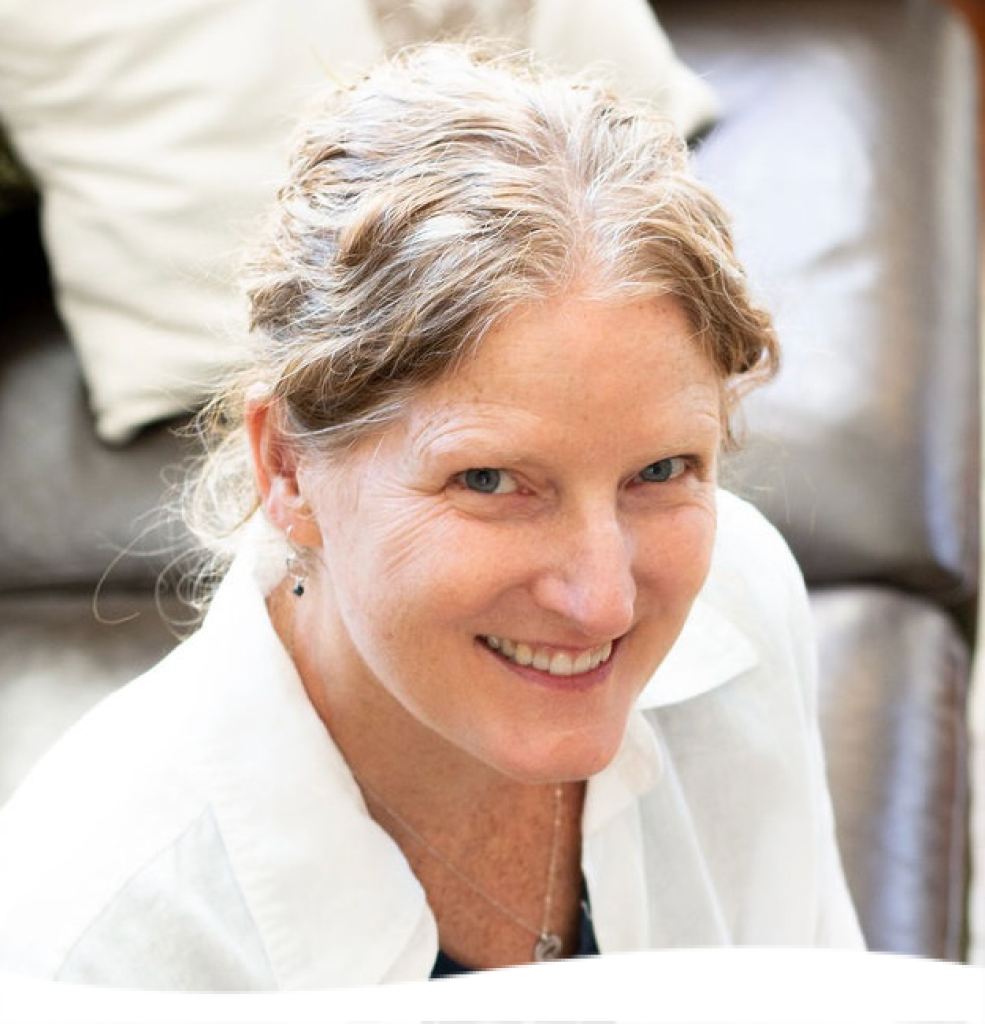
Laura Stewart

Board Member

Laura Stewart is the Community Wildfire Resilience Coordinator with Forsite Fire, supporting communities across Canada with wildfire risk assessments, mitigation planning, and program delivery. She has more than a decade of experience advancing wildfire resilience at Indigenous, municipal, provincial/territorial, and national levels. Previously, Laura served nearly eleven years as Alberta’s Provincial FireSmart Specialist, leading community, WUI, neighbourhood, and Home Ignition Zone programs, coordinating funding, and partnering with communities and fire services across the province. She has also served as Board Chair with both the Partners in Protection Association (FireSmart Canada) and the Community Wildfire Resilience Association of Alberta.


Sara Walsh, PhD

Board Member

Sara Walsh, PhD, is a disaster risk reduction and climate resilience specialist with more than 15 years of experience spanning Canada, Nepal, the Middle East, and North Africa. Until November 2025, she served as Thematic Lead for Climate and Resilience with the International Federation of Red Cross and Red Crescent Societies (IFRC), where she supported Red Cross and Red Crescent Societies to strengthen their climate and risk reduction work across the region. Saracurrently works as a freelance consultant with the United Nations, governments, and humanitarian organizations on recovery, risk governance, and community-based resilience. Sara teaches at a Canadian university and holds a PhD in Disaster Risk Reduction. Her work emphasizes anticipatory action, equity, and bridging research with practice to shape more resilient and sustainable futures.

Alison Criscitiello

Board Member

Alison Criscitiello, PhD, is an ice core scientist and high-altitude mountaineer who explores the history of climate and sea ice in polar and high-alpine regions using ice core chemistry. Alison’s work also focuses on environmental contaminant histories in ice cores from the Canadian high Arctic and the water towers of the Canadian Rockies. In 2010, she led the first all-women’s ascent of Lingsarmo, a 22,818-foot peak in the Indian Himalaya. Alison has earned three American Alpine Club (AAC) climbing awards, the John Lauchlan and Mugs Stump alpine climbing awards, as well as the first Ph.D. in Glaciology ever conferred by MIT. She is an Assistant Professor and the Director of the Canadian Ice Core Lab at the University of Alberta. She is the co-founder of Girls on Ice Canada.