A Community of Practice Towards the Global Goal on Adaptation

We are pleased to offer this reflective piece by Dr. Animesh Kumar, Head, UNDRR Office in Bonn, who served on the UNFCCC Expert Group for the Global Goal on Adaptation (GGA) along with TRI’s president / CEO.  
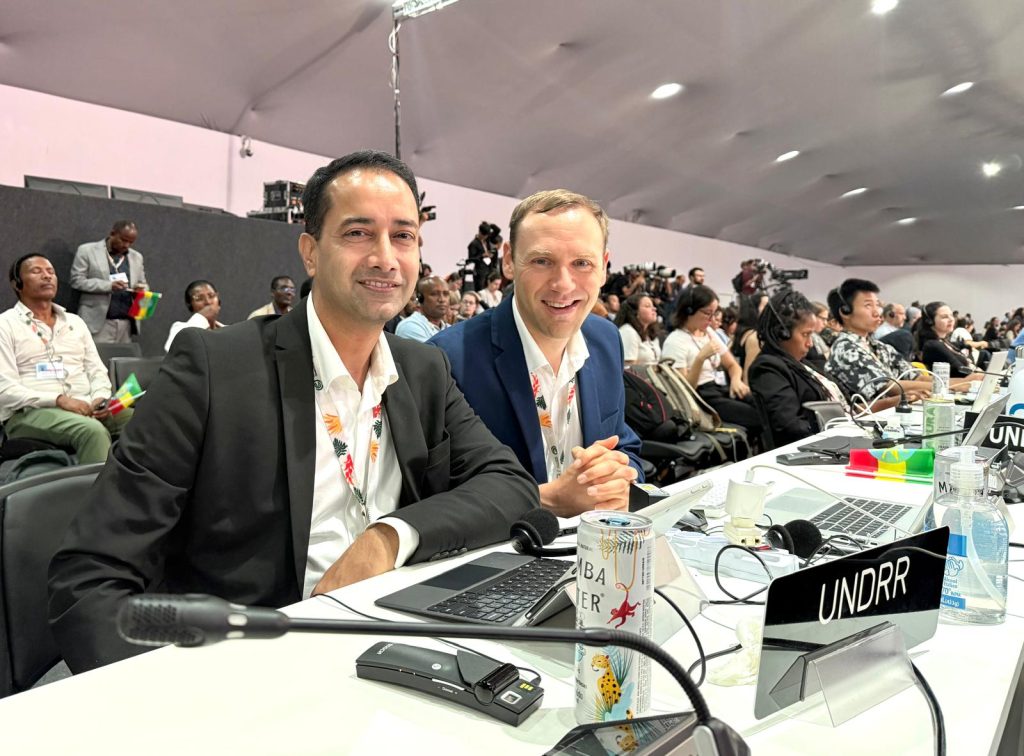
Expert group members, Drs Animesh Kumar, UNDRR and Timo Leiter, London School of Economics and Political Science at COP30 meetings

The two-year UAE–Belém work programme, on the development of indicators for measuring progress achieved towards the Global Goal on Adaptation (GGA) targets, concluded in Belém with the adoption of the 59 Belém Adaptation Indicators. 

See the draft decision here: https://www.unfccc.int/documents/653890 

The process of the development of these indicators was not without its challenges, both at the technical and political ends, as was evident even at and after the adoption of the indicators. It should be fully acknowledged that the adopted indicators will need a lot of work to make sense and to draw meaningful narratives to inform policy and decision-making.  

Notwithstanding, it is indeed a time of celebration for all of us as the indicators form a crucial milestone in transforming the GGA from a broad aspiration into a measurable and actionable global effort, underscored by much-needed accountability in resilience building. 

The two-year Belém-Addis vision on adaptation will be critical to operationalizing the Belém Adaptation Indicators, as well will be the call for efforts to at least triple adaptation finance by 2035. 

It has been an honour and pleasure, working with a dedicated team of experts who developed the 100 indicators proposed to the COP/CMA, to form the most substantive input into this strategic process. We now have an able community of practice, who would be important to keep engaged, including potentially through the technical taskforce that the CMA has established as part of its decision.  

Finally, I am also pleased to add that, just like adaptation, knowledge building is an iterative process. The indicator development process benefited from that followed by the Sendai Framework and the Sustainable Development Goals (SDGs) ten years back. This is demonstrated both in existing methods and data, as well as a quarter of the adopted indicators which reflect the Sendai Framework, directly or indirectly.  

Looking forward to continuing to contribute to this process, as I sign off from Belem! 


Animesh Kumar 

Head, UNDRR Office in Bonn 
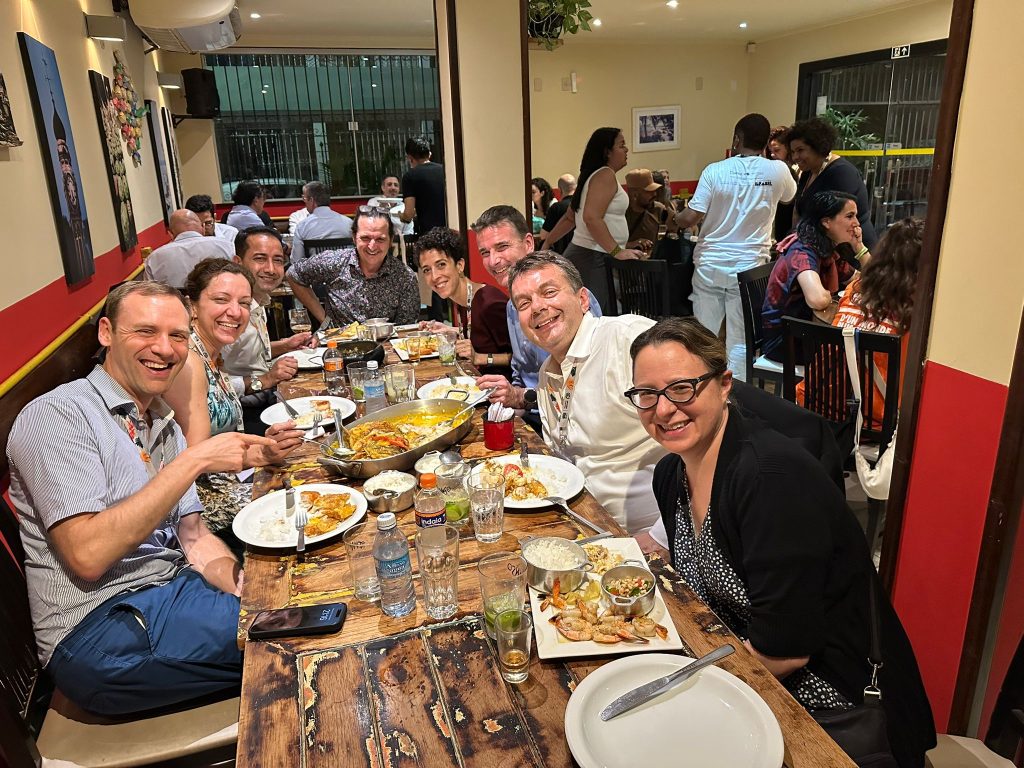
Above: A few of the technical group members connecting over dinner in Belém. 

About the header image: Visitors stroll through the Green Zone corridor at the 30th Conference of the Parties (COP30). Photo by Alex Ferro/COP30.
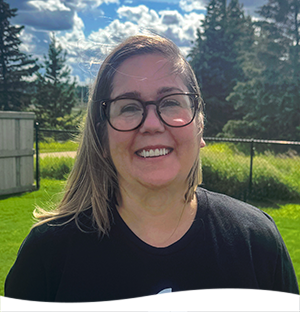
Laura Stewart

Board Member

Laura Stewart is the Community Wildfire Resilience Coordinator with Forsite Fire, supporting communities across Canada with wildfire risk assessments, mitigation planning, and program delivery. She has more than a decade of experience advancing wildfire resilience at Indigenous, municipal, provincial/territorial, and national levels. Previously, Laura served nearly eleven years as Alberta’s Provincial FireSmart Specialist, leading community, WUI, neighbourhood, and Home Ignition Zone programs, coordinating funding, and partnering with communities and fire services across the province. She has also served as Board Chair with both the Partners in Protection Association (FireSmart Canada) and the Community Wildfire Resilience Association of Alberta.


Sara Walsh, PhD

Board Member

Sara Walsh, PhD, is a disaster risk reduction and climate resilience specialist with more than 15 years of experience spanning Canada, Nepal, the Middle East, and North Africa. Until November 2025, she served as Thematic Lead for Climate and Resilience with the International Federation of Red Cross and Red Crescent Societies (IFRC), where she supported Red Cross and Red Crescent Societies to strengthen their climate and risk reduction work across the region. Sara currently works as a freelance consultant with the United Nations, governments, and humanitarian organizations on recovery, risk governance, and community-based resilience. She teaches at a Canadian university and holds a PhD in Disaster Risk Reduction. Her work emphasizes anticipatory action, equity, and bridging research with practice to shape more resilient and sustainable futures.

Alison Criscitiello

Board Member

Alison Criscitiello, PhD, is an ice core scientist and high-altitude mountaineer who explores the history of climate and sea ice in polar and high-alpine regions using ice core chemistry. Alison’s work also focuses on environmental contaminant histories in ice cores from the Canadian high Arctic and the water towers of the Canadian Rockies. In 2010, she led the first all-women’s ascent of Lingsarmo, a 22,818-foot peak in the Indian Himalaya. Alison has earned three American Alpine Club (AAC) climbing awards, the John Lauchlan and Mugs Stump alpine climbing awards, as well as the first Ph.D. in Glaciology ever conferred by MIT. She is an Assistant Professor and the Director of the Canadian Ice Core Lab at the University of Alberta. She is the co-founder of Girls on Ice Canada.