Strengthening Climate Resilience with the Piikani Nation

The Piikani Nation is a small Blackfoot community in southern Alberta, Canada. Risks associated with climate change such as wildfires, flooding and drought are serious threats to the community and climate change is exacerbating already stressed environments due to changes in water flow from external dams, overgrazing of traditional lands, and western farming practices.

The Resilience Institute and the Piikani Nation are partnering to develop local climate resilience through several co-created activities. Together, our work is facilitating community-led strategies and reciprocal learning that is strengthening capacity and momentum for climate action in the community and beyond with those it inspires.

Elder Big Bull named our collaborative efforts
sūṗiiṗo’omaaksin’ which in Blackfoot means in the spirit of planting seeds.

The evolution of our activities reflects a partnership built on trust and flexibility in approach. These factors are enabling capacity building, planning and action to strengthen resilience to climate impacts.

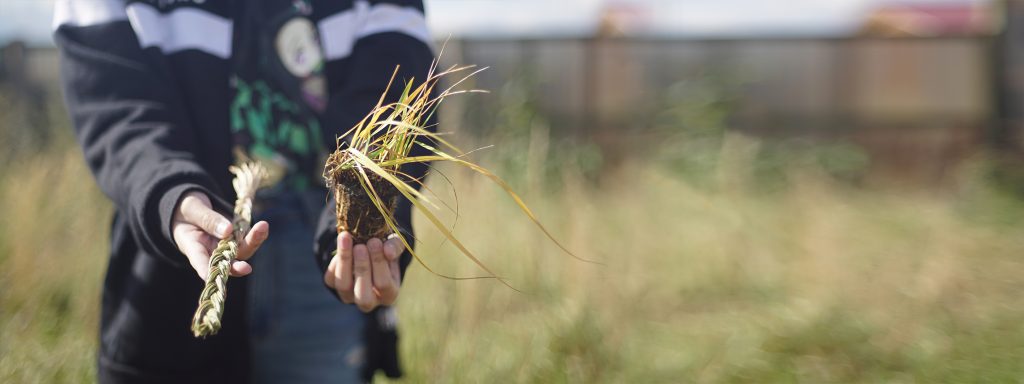
sūṗiiṗo’omaaksin has been guided by several knowledge holders including the late Peter Strikes With A Gun, Elder and former Chief of Piikani Nation. Peter was most passionate about supporting our efforts on sweetgrass as a connector between people and places.
This initiative highlights the importance of Indigenous knowledge and holistic perspectives in the efforts to adapt to a warming world – lessons that are locally and globally relevant. Our partnership also exemplifies active reconciliation with Indigenous Peoples and how trusted partnerships can strengthen the capacity to advance climate goals.  All activities adhere to the Free, Prior and Informed Consent principles for collaborating with Indigenous Peoples.

The Resilience Institute team is honoured to continue our climate work with the Piikani Nation.

Examples of major activities to date include:

  • Advancing Food Security by utilizing both traditional knowledge and good practices in scientific/technical knowledge to strengthen local food and energy security. This includes sources and supporting the implementation of a hydroponic farm (Growcer) that is now providing an abundance of fresh food for the community.


  • Climate Risk & Vulnerability Assessment supported by the Municipal Climate Change Action Centre’s Climate Resilience Capacity Building Program. The TRI team led the community engagement and the creation of the report in partnership with Associated Engineering and the Prairie Adaptation Research Collaborative, (PARC).


  • The Potential of Sweetgrass in Prairie Grasslands Carbon Sequestration and Biodiversity Research TRI secured funding from AgSci Canada and facilitated a collaborative research partnership between Agriculture and AgriFood Canada (AAFC), the University of Lethbridge, Environment and Climate Change Canada (ECCC), and the Piikani Nation. Winner of the CanadaClean50 2025 Project of the Year.


  • What Sweetgrass is Telling Us building on research we facilitated that confirmed sweetgrass is a natural climate change solution, this project enabled thousands of sweetgrass plus to be planted and monitored on Piikani Lands and for the first time ever – in Waterton National Park.


  • Building a Monitoring Program Inspired by the Traditional Piikani Winter Count brought knowledge holders from the Piikani Nation together with students and climate experts from the University of Calgary. The team looked at methods for weaving traditional ways of documenting and sharing change from the Piikani Nation, known as the Winter Count, with good practices from other community-based monitoring techniques.


  • Stories of Resilience from the Piikani Nation brought together voices from multiple generations to explore what it means to be resilient in the face of a warming planet. Students from the Piikani High School and recent graduates were also mentored by award-winning Blackfoot Artist, Adrian Stimson.

  • Youth-Led Local Early Action Plan (LEAP) created hands-on opportunities for Piikani youth to learn about climate change and how to engage/interview community members.


The following are some of the supporters of our efforts to date:

AgriScience Program Canada – The Potential of Sweetgrass in Prairie Grasslands Carbon Sequestration and Biodiversity

All One Sky Foundation – Youth-led Local Early Action planning

Calgary Foundation – What Sweetgrass is Telling Us, Local Early Action Planning

University of Calgary Mobilizing Climate Action Grant for Southern Alberta – Building a Monitoring Program Inspired by the Traditional Piikani Winter Count

Canadian Red Cross – Voices from Piikani Youth and Roots for Resilience activities

Commission for Environmental Cooperation – Environmental Justice and Climate Resilience Grant Program (EJ4) – multiple activities related to sweetgrass and biodiversity

Alberta Ecotrust Foundation – Piikani Composting / Circular Economy

Patagonia Environmental Grants Fund of Tides Foundation – Youth-led Local Early Adaptation Action Plan
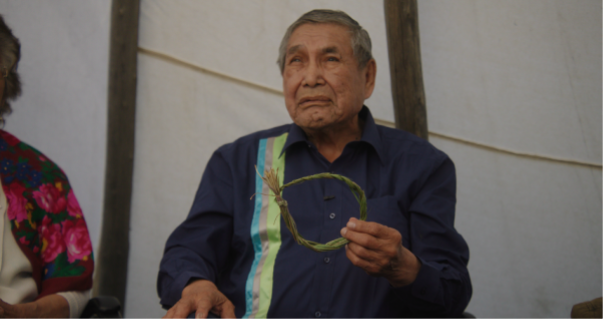
Elder Peter Strikes with a Gun blessing Sweetgrass before passing it to a Piikani youth in a transfer ceremony. Photo Credit: ReGeneration.

In memory of Peter Strikes With A Gun, Piikani Nation Chief and Elder. We miss you and your guidance.


Carole Beaton

Science Communicator and External Engagement Specialist

Carole brings over two decades of small-business ownership experience, having built and run several ventures across construction, food production, and retail. Through running her own companies, she became self-taught in bookkeeping, administration, and financial management, developing a close eye for numbers and a disciplined approach to expenses. She also brings experience supporting executive leadership in a nonprofit setting. A longtime Canmore resident, Carole spends her free time mountain biking and Nordic skiing, and is glad to bring her community roots and hands-on administrative skills to TRI’s finance team.

Nakita Rubuliak

Science Communicator and External Engagement Specialist

Nakita is a science communication professional with extensive experience in knowledge synthesis, fieldwork, art and design, and creative collaboration. Using a multidisciplinary lens, her work bridges research and storytelling, translating complex scientific topics into engaging messages and compelling graphics that resonate with a range of audiences.

Before joining TRI, Nakita worked as a Science Illustrator and Writer at Fuse Consulting and later with the Canadian Parks and Wilderness Society, experiences that nurtured her skills in science communication.

Above all, Nakita has a passion for connecting with people and communities, both in person and through visual storytelling. She approaches projects with a place-based lens and a deep respect for diverse perspectives and knowledge systems. 

Jill Decker

Controller

Jill brings 20 years of experience in financial reporting, assurance, and compliance, with a strong specialization in the not-for-profit sector.  She holds a Bachelor of Commerce (Accounting) from the University of Saskatchewan (2005) and a CPA (CA) designation, earned in 2010. Jill’s background in public practice has provided her with the opportunity to work with a variety of not-for-profit organizations in Alberta, as well as the joy of serving Canada’s Arctic over the past decade, supporting organizations in the Qikiqtaaluk Region of Nunavut. 

Cassidy Grimes

Climate Analyst & Coordinator

Cassidy holds a Master’s degree in Climate Change from the University of Waterloo, where she studied topics such as climate science, climate mitigation and adaptation strategies, and community planning for climate change. Cassidy is passionate about supporting communities in preparing for and adapting to climate change through education, community engagement, and applied research. Her work focuses on fostering climate resilience by connecting scientific knowledge with local experiences and community-driven solutions.

Laura Stewart

Board Member

Laura Stewart is the Community Wildfire Resilience Coordinator with Forsite Fire, supporting communities across Canada with wildfire risk assessments, mitigation planning, and program delivery. She has more than a decade of experience advancing wildfire resilience at Indigenous, municipal, provincial/territorial, and national levels. Previously, Laura served nearly eleven years as Alberta’s Provincial FireSmart Specialist, leading community, WUI, neighbourhood, and Home Ignition Zone programs, coordinating funding, and partnering with communities and fire services across the province. She has also served as Board Chair with both the Partners in Protection Association (FireSmart Canada) and the Community Wildfire Resilience Association of Alberta.


Sara Walsh, PhD

Board Member

Sara Walsh, PhD, is a disaster risk reduction and climate resilience specialist with more than 15 years of experience spanning Canada, Nepal, the Middle East, and North Africa. Until November 2025, she served as Thematic Lead for Climate and Resilience with the International Federation of Red Cross and Red Crescent Societies (IFRC), where she supported Red Cross and Red Crescent Societies to strengthen their climate and risk reduction work across the region. Saracurrently works as a freelance consultant with the United Nations, governments, and humanitarian organizations on recovery, risk governance, and community-based resilience. Sara teaches at a Canadian university and holds a PhD in Disaster Risk Reduction. Her work emphasizes anticipatory action, equity, and bridging research with practice to shape more resilient and sustainable futures.

Alison Criscitiello

Board Member

Alison Criscitiello, PhD, is an ice core scientist and high-altitude mountaineer who explores the history of climate and sea ice in polar and high-alpine regions using ice core chemistry. Alison’s work also focuses on environmental contaminant histories in ice cores from the Canadian high Arctic and the water towers of the Canadian Rockies. In 2010, she led the first all-women’s ascent of Lingsarmo, a 22,818-foot peak in the Indian Himalaya. Alison has earned three American Alpine Club (AAC) climbing awards, the John Lauchlan and Mugs Stump alpine climbing awards, as well as the first Ph.D. in Glaciology ever conferred by MIT. She is an Assistant Professor and the Director of the Canadian Ice Core Lab at the University of Alberta. She is the co-founder of Girls on Ice Canada.